Understanding where our state’s money comes from is a foundational aspect of civic engagement. Tax revenue collection forms the backbone of Iowa’s ability to fund everything from education and public safety to healthcare and infrastructure. When you’re looking at the health of our state’s finances, it’s these figures that tell a critical story.
Citizens and stakeholders rightly ask how well Iowa is performing in managing its economic resources and ensuring fiscal stability. Monitoring tax revenue collection trends allows us to observe the economic pulse of our state and understand the resources available for strategic planning and public investment.
At Results Iowa, we provide transparent reporting on vital policy fronts, allowing you to see the measurable indicators that reflect government performance. This focus on open measurement ensures state resources are utilized reasonably and offers citizens an opportunity to observe the state government’s performance, as we track critical economic data like Small Business Survival Data in Iowa.
What is Tax Revenue Collection?
Tax revenue collection refers to the total funds a government receives from various taxes levied on individuals and businesses. In Iowa, this primarily includes personal income tax, sales and use tax, and corporate income tax. These funds are essential for financing public services and state operations, reflecting the overall economic activity within the state.
The state collects revenue through several primary channels. Personal income tax is typically the largest component, based on the earnings of Iowa residents. Sales and use taxes are collected on goods and services purchased, while corporate income tax comes from business profits. Property taxes, while significant, are largely collected at the local level to fund services like schools and local government, though state policies can impact them.
Understanding these different streams is crucial because each can be affected by distinct economic factors. For instance, consumer spending directly impacts sales tax receipts, while employment levels influence personal income tax collections. As reported by the Associated Press, state budgets, and thus revenue, are highly sensitive to broader economic conditions and shifts in consumer and business behavior.
How Iowa Monitors Tax Revenue
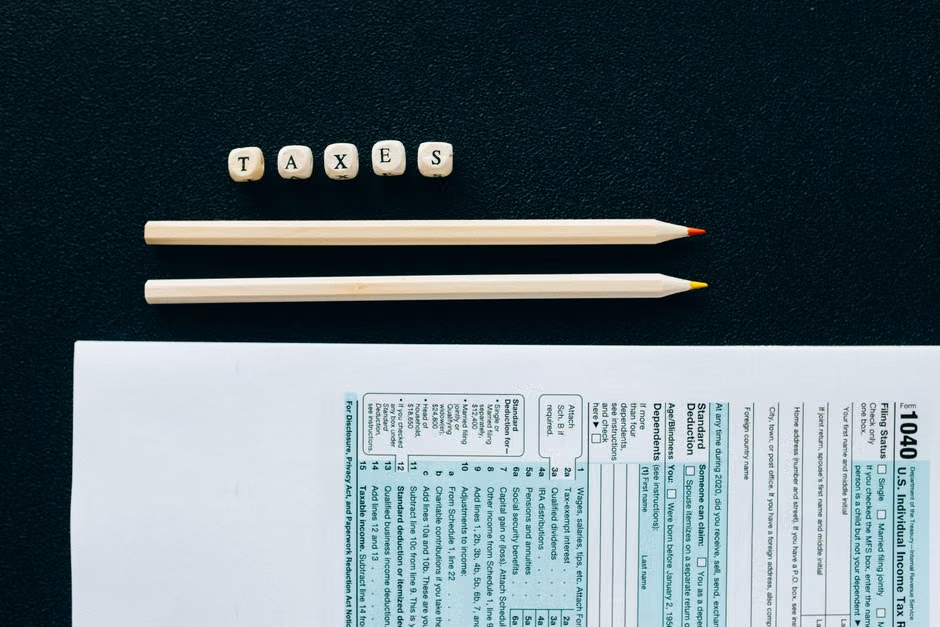
Results Iowa, in conjunction with state fiscal agencies, monitors tax revenue by tracking monthly and annual receipts against budgeted projections. This process involves analyzing data from the Iowa Department of Revenue and other state departments, allowing us to assess performance against quantifiable objectives and strategic planning goals.
Our direct management of statewide performance tracking across various policy departments provides us with real data from state agencies. We look not just at raw numbers, but at the underlying trends and the economic factors driving them. This includes observing employment rates, consumer confidence, and business investment, all of which are measurable indicators of the economic environment affecting tax receipts.
Through consistent data collection and transparent reporting, we evaluate the impact of policy changes and economic shifts on the state’s fiscal health. This robust framework allows citizens and stakeholders to observe how state resources are generated and managed, offering a clear picture of government accountability.
What Do Iowa’s Tax Revenue Trends Tell Us?
Iowa’s tax revenue trends serve as a critical barometer of the state’s economic health, reflecting consumer spending, employment levels, and business profitability. Analyzing these trends helps us identify periods of growth or contraction, anticipate budgetary challenges, and ensure the state can meet its financial obligations for public services and investments.
When we look at historical data tracking across multiple years, we can discern patterns and understand the long-term trajectory of Iowa’s economy. For instance, a sustained increase in sales tax revenue might indicate robust consumer confidence and spending, while a dip in corporate income tax could signal a slowdown in business profitability or investment within the state. Our understanding of performance measurement methodology helps us interpret these complex datasets.
Key indicators we look for include:
- Consistent growth in personal income tax receipts, suggesting a healthy job market and rising wages.
- Stable or increasing sales and use tax collections, indicating steady consumer activity.
- Fluctuations in corporate income tax, which can reflect the profitability of Iowa businesses and broader economic cycles.
- Impacts of legislative tax reforms on overall collection totals and distribution.
- Comparison of actual revenue against initial projections to assess forecasting accuracy.
- Any significant shifts in the tax base, such as population changes or industrial transitions.
Iowa Tax Revenue Collection Trends 2023
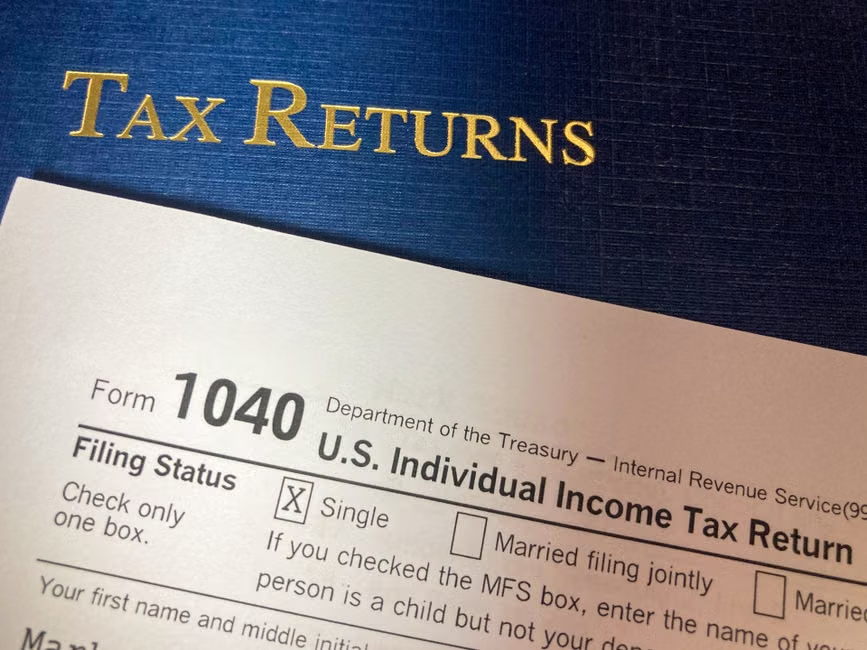
Iowa’s tax revenue collection trends in 2023 generally reflected a period of stability following pandemic-era fluctuations, though with some areas seeing moderation compared to the strong growth years immediately preceding. Initial forecasts often accounted for continued economic resilience, but national and global economic pressures could influence final year-end results.
As state governments across the U.S. navigate post-pandemic fiscal landscapes, Iowa’s performance remains under close scrutiny. Our data collection shows that while some sectors maintained robust performance, others experienced a leveling off. We observe this through specific state programs whose funding directly correlates with revenue availability, such as allocations for education or workforce development. The long-term trend analysis helps us distinguish between temporary shifts and more enduring economic changes. We also monitor Business Startup Rates and Failure Statistics as a related economic indicator.
Iowa Tax Revenue Collection Trends 2021
In 2021, Iowa experienced a notable rebound in tax revenue collection, building on the recovery seen in late 2020. This growth was largely driven by federal stimulus measures, increased consumer spending, and a strengthening job market. The year marked a significant recovery from the initial economic uncertainties brought on by the global pandemic.
Our data from that period reflects a period where federal unemployment tax changes and other federal programs injected liquidity into the economy, boosting both personal income and consumer activity. This directly impacted sales tax receipts and helped stabilize income tax collections. Results Iowa’s detailed knowledge of performance measurement helps us understand how these external factors influence our state’s measurable indicators.
“State governments are on solid financial footing but face uncertainty related to inflation and a potential recession, making diligent revenue tracking more important than ever.”
Iowa Tax Revenue Collection Trends 2020
The year 2020 presented unique challenges for Iowa’s tax revenue collection, marked by initial declines due to the economic shutdown in the early months of the pandemic. However, the state saw a resilient recovery in the latter half of the year, aided by federal relief efforts and a quicker-than-expected return to some economic activity.
During this period, our platform tracked the significant shifts in revenue streams. For example, specific data from the Iowa Department of Public Safety showed how public safety budgets had to adapt to changing fiscal realities. The rapid adjustments made by Iowa citizens and businesses, alongside government support, played a crucial role in mitigating what could have been a more severe and prolonged downturn in tax receipts. Our experience in managing statewide performance tracking highlighted the immediate impact of global events on local economies.
Understanding these trends is also important when considering other economic factors such as Median Wage Trends in Iowa, which directly influence personal income tax collections and overall economic vitality.
Factors Influencing Revenue Stability
While tax revenue is a primary indicator, other factors also impact Iowa’s fiscal health and government’s ability to deliver services. Economic diversity, workforce participation, and legislative changes all play a role. A state heavily reliant on a single industry, for example, faces greater risk if that sector experiences a downturn, regardless of its tax collection efficiency.
Alternatives for fostering economic stability go beyond simply collecting more taxes. These include strategic investments in education and job training to improve the workforce, attracting diverse businesses, and maintaining a favorable business climate. These efforts help expand the tax base organically. Results Iowa’s expertise in education assessment, such as ITBS proficiency standards, is vital as a strong education system contributes to a skilled workforce, which in turn fuels economic growth and a broader tax base.
“The careful stewardship of state tax revenues isn’t just about balancing budgets; it’s about investing in the future of our communities and ensuring the long-term well-being of our citizens through robust public services.”
What to Expect from Revenue Performance
When observing Iowa’s tax revenue performance, citizens can expect fluctuations reflecting the natural cycles of the economy. While consistent growth is desirable, periods of slower growth or even slight declines are normal. The key isn’t perpetual increase, but rather responsible management and strategic adaptation to these shifts.
Realistic timelines for observing the impact of revenue changes are usually on an annual or biennial basis, corresponding to the state’s budget cycles. Short-term dips in revenue might not immediately trigger service cuts, thanks to reserve funds and careful planning. However, sustained trends, whether positive or negative, will inform legislative decisions on budget allocations for future years. This is where transparent reporting becomes critical, allowing for informed public discussion about resource allocation.
Engaging with Iowa’s Fiscal Data
As citizens, your engagement with state fiscal data is crucial for fostering accountability and ensuring government performance aligns with public needs. Understanding tax revenue trends empowers you to ask informed questions and participate meaningfully in civic discourse.
Here are practical tips for engaging with Iowa’s fiscal data:
- Regularly review Results Iowa reports: We publish performance reports with specific data update dates and sources, providing the latest information on tax collections and economic indicators.
- Understand the budget cycle: Learn when the state budget is proposed, debated, and adopted. This helps you understand when revenue data is most critical for decision-making.
- Identify key revenue sources: Know the largest contributors to Iowa’s tax coffers (personal income, sales, corporate taxes) and how changes in these affect overall funding.
- Consider economic context: Always view revenue numbers within the broader economic context of the state and nation, including factors like inflation and employment rates.
- Share your insights: Use our contact form to ask questions or provide feedback on the data. Your input helps us refine our transparency efforts.

Monitoring Iowa’s tax revenue collection trends is a vital part of transparent government and civic accountability. By providing access to measurable indicators and historical data, Results Iowa helps ensure citizens, policymakers, and community leaders can observe and understand the performance of our state government. We encourage you to explore the data, ask questions, and engage in the ongoing conversation about Iowa’s fiscal health and its impact on the quality of life for all Iowans.