Early literacy isn’t just about learning to read; it’s the foundation for all future learning, civic engagement, and workforce readiness. When children develop strong literacy skills early, they’re better equipped to succeed in school and contribute meaningfully to our communities. In Iowa, we recognize this critical importance, and sustained efforts are underway to ensure every child has access to the resources they need.
However, achieving widespread literacy isn’t without its challenges. We’re constantly working to identify effective programs, measure their impact, and ensure accountability in our educational systems. It’s a collective responsibility that involves parents, educators, and state agencies working in concert.
Results Iowa assists citizens in knowing about the performance of the state government in vital policy fronts, including a dedicated focus on education performance and outcomes. We track key indicators to provide transparent reporting on how our state’s early literacy initiatives are truly making a difference.
Understanding Early Literacy and Its Significance
At its core, literacy refers to the ability to read, write, speak, and listen effectively, allowing individuals to communicate and understand the world. Early literacy specifically focuses on the skills children develop from birth through age five that prepare them for reading and writing. This includes foundational abilities like print awareness, phonological awareness, vocabulary, and narrative skills. According to the National Institutes of Health (NIH), these early experiences with language and books are crucial predictors of later academic success. The National Institute of Child Health and Human Development emphasizes that early exposure to language, stories, and print lays the groundwork for robust neural pathways essential for reading.
The development of these skills isn’t solely about formal schooling. It begins long before kindergarten, through interactions at home and in early learning environments. Open measurement allows us to make sure that the state resources are utilized in a reasonable way and gives citizens an opportunity to observe the performance of the state government in supporting these crucial developmental stages.
What is the Iowa Reading Research Center?
The Iowa Reading Research Center (IRRC) is a state-funded center dedicated to improving literacy outcomes for all Iowans, from birth through adulthood. It conducts research, provides professional development for educators, and offers resources for families, serving as a hub for evidence-based literacy practices within the state. The IRRC plays a central role in guiding policy and practice.
Established to address the complexities of reading instruction and intervention, the IRRC’s work involves synthesizing the latest scientific research on reading and translating it into practical strategies for educators. This includes evaluating the effectiveness of various literacy programs and providing technical assistance to school districts. Our direct management of statewide performance tracking across education departments benefits greatly from the IRRC’s insights, allowing us to align our accountability frameworks with proven methodologies. They provide vital data and recommendations that inform our collective efforts to enhance literacy across the state.
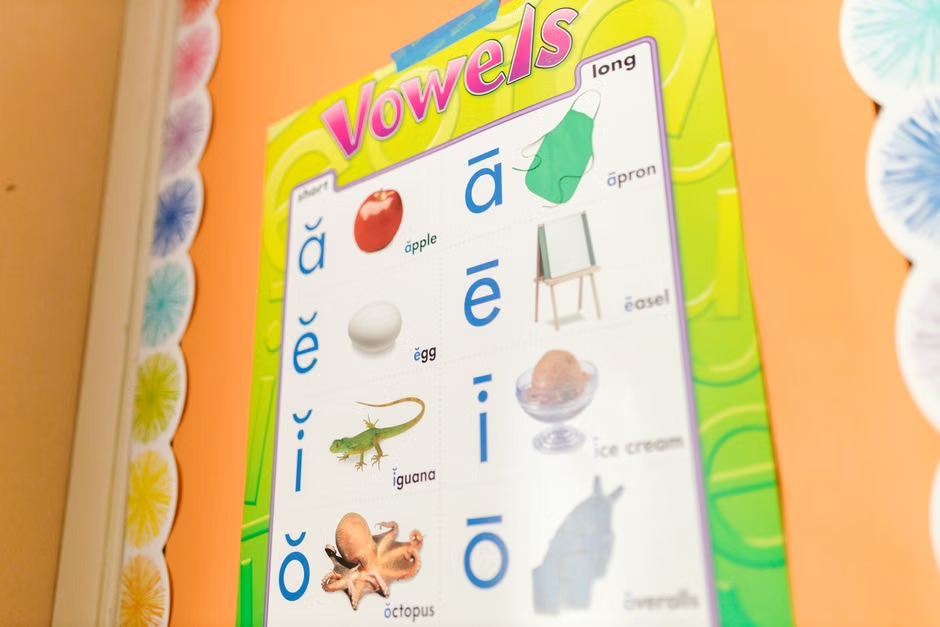
How Does the Early Literacy Initiative Impact Iowa?
Iowa’s Early Literacy Initiative is a concerted effort to ensure all children are proficient readers by the end of third grade, recognizing this benchmark as critical for future academic success. The initiative focuses on providing evidence-based literacy instruction and interventions in schools, supported by professional development for teachers and consistent progress monitoring. It aims to identify students needing support early and provide targeted assistance.
This initiative isn’t just a recommendation; it’s a strategic plan backed by measurable indicators. For instance, in our detailed knowledge of performance measurement methodology, we observe its emphasis on universal screening to identify students at risk for reading difficulties. This allows for timely intervention before gaps become too wide. The initiative encourages schools to implement a Multi-Tiered System of Supports (MTSS) for literacy, providing escalating levels of support based on student need. We monitor results across various districts to track the initiative’s effectiveness in improving reading proficiency rates, ensuring our state resources are allocated strategically.
What is the Iowa Comprehensive Literacy Plan?
The Iowa Comprehensive Literacy Plan (ICLP) provides a statewide framework for literacy instruction, from birth through 12th grade, ensuring a consistent and high-quality approach across all educational settings. It outlines best practices, instructional strategies, and professional learning recommendations to support literacy development for all students. This plan serves as a roadmap for educators and administrators.
The ICLP is designed to foster a cohesive and effective approach to literacy education. It integrates various components, including:
- High-Quality Core Instruction: Emphasizes research-based teaching methods for all students.
- Universal Screening and Progress Monitoring: Regularly assessing student literacy skills to identify needs and track growth.
- Targeted Interventions: Providing additional support for students who are struggling, tailored to their specific challenges.
- Professional Development: Offering ongoing training and resources for educators to enhance their literacy instruction skills.
- Family and Community Engagement: Encouraging partnerships between schools, families, and community organizations to support literacy outside the classroom.
These explicit goals and performance indicators, backed by charts and data, allow us to show progress with time on our general education dashboard.
“Early literacy interventions, when implemented consistently and with fidelity, have a profound and lasting positive effect on a child’s educational trajectory. The ability to read proficiently by third grade is not just an academic goal; it’s a gateway to lifelong learning and opportunity.”
What to Look For: Signs of Strong Early Literacy Development
Parents and caregivers play a crucial role in observing and nurturing early literacy skills. Recognizing these signs can help identify areas where a child is thriving and where they might need additional support. Here are some key indicators of healthy early literacy development:
- Showing interest in books, turning pages, and pointing to pictures.
- Understanding that print carries meaning (e.g., recognizing familiar words like their name or common signs).
- Enjoying rhyming games and identifying words that rhyme.
- Recognizing some letters of the alphabet and understanding that letters make sounds.
- Retelling familiar stories or creating simple narratives.
- Asking questions about stories or expressing preferences for certain books.
- Attempting to write or draw, even if it’s scribbles, to convey a message.
If you have concerns about a child’s development, speaking with an educator or pediatrician is always a valuable step. Early identification allows for timely intervention, which is often more effective.
What are some effective literacy instruction examples?
Effective literacy instruction is dynamic and multi-faceted, adapting to the diverse needs of learners. Beyond basic phonics, it involves engaging children with various forms of text and fostering a love for reading and communication. Many strategies have proven successful in different educational settings across Iowa.
Examples of effective literacy instruction include:
- Phonological Awareness Activities: Games that focus on sounds in language, such as rhyming, clapping out syllables, and identifying initial sounds in words.
- Shared Reading: Reading aloud to children, pointing to words, discussing pictures, and inviting participation, often with big books or projected texts.
- Guided Reading: Small-group instruction where teachers support students in reading texts slightly above their independent reading level, focusing on specific reading strategies.
- Independent Reading: Providing opportunities for students to choose and read books on their own, fostering enjoyment and fluency.
- Writing Workshops: Structured time for students to practice writing, receiving feedback, and developing their ideas from drafting to revision.
- Vocabulary Building: Explicitly teaching new words through contexts, definitions, and word games, linking them to existing knowledge.
These methods are often integrated within after school programs and early learning centers that specialize in youth advocate programs, aiming to support broader academic and social development. Our partnerships with multiple state departments, including those related to Human Services, help ensure that these programs reach a wide audience.

Choosing the Right Path: Suitability and Alternatives
While structured school programs and the Iowa Comprehensive Literacy Plan provide a robust framework, it’s important to recognize that a one-size-fits-all approach doesn’t suit every child. Some children may thrive in different environments or require supplemental support.
For instance, homeschool programs, when thoughtfully designed, can offer highly individualized literacy instruction tailored to a child’s pace and learning style. Parents might leverage online resources, educational apps, and a wide array of literature to build a strong foundation. Additionally, community organizations often provide free early literacy programs that supplement school-based efforts, like story times at local libraries or tutoring services. These can be particularly beneficial for families seeking extra enrichment without financial burden.
It’s also crucial to consider the broader concept of media literacy. In today’s digital age, understanding how to critically evaluate information from various media sources is as vital as traditional reading skills. While not a direct alternative to early literacy, it’s a necessary expansion of literacy education for older children. Our transparent data sources clearly cited for each metric help citizens evaluate the success of diverse initiatives, including those that support literacy development beyond conventional classroom settings. Board-certified providers and educators recommend a holistic approach to a child’s learning journey, incorporating various methods to meet individual needs.
“A child’s early environment, including the richness of language exposure and access to books, significantly shapes their cognitive development. Programs that engage both parents and children in literacy activities have shown tremendous efficacy in closing achievement gaps and preparing children for school success.”
How does the Iowa Department of Education support literacy?
The Iowa Department of Education (DE) plays a pivotal role in promoting and ensuring literacy across the state by establishing standards, providing resources, and overseeing the implementation of key initiatives. It works to equip school districts with the tools and guidance necessary to deliver high-quality literacy instruction from early childhood through high school. The department’s efforts are central to maintaining consistent educational quality.
The DE is responsible for developing and regularly updating the Iowa Academic Standards for English Language Arts, which articulate clear expectations for what students should know and be able to do at each grade level regarding reading, writing, speaking, and listening. They also offer professional development opportunities, including training on evidence-based practices like those supported by the Iowa Reading Research Center. Through these efforts and its oversight of programs like the Early Literacy Initiative, the Iowa DE ensures accountability and progress. We track the results of these statewide strategies, observing how specific policy initiatives translate into measurable improvements in student outcomes.
Achieving Measurable Results: What to Expect
The impact of early literacy programs isn’t always immediate, but with consistent effort and robust measurement, we can observe significant positive trends over time. We focus on quantifiable objectives and long-term trend analysis.
Here’s what citizens and stakeholders can observe in terms of results and expectations:
- Improved Kindergarten Readiness: Within 1-2 years of sustained program implementation, we typically see an increase in the percentage of children demonstrating foundational literacy skills upon entering kindergarten.
- Enhanced Third-Grade Reading Proficiency: This is a critical benchmark. Over a 3-5 year period, effective programs should lead to a measurable rise in the number of students meeting or exceeding third-grade reading proficiency standards. Our data from past biennium periods consistently shows the importance of early intervention in reaching this goal.
- Narrowed Achievement Gaps: Successful initiatives aim to reduce disparities in literacy outcomes among different demographic groups, though this often requires sustained effort over 5+ years.
- Increased Student Engagement: Beyond test scores, we expect to see qualitative improvements, such as students demonstrating a greater love for reading and more confidence in their communication abilities.
- Long-Term Academic Success: While harder to directly attribute solely to early literacy, improved early literacy is correlated with higher graduation rates and overall academic achievement in later grades.
Every policy area has its explicit goals and performance indicators, and Results Iowa provides the charts and data to show this progress with time, demonstrating how strategic planning and open measurement contribute to these vital outcomes.
Practical Tips for Fostering Early Literacy
Supporting a child’s early literacy development doesn’t require formal teaching; it often comes down to simple, consistent interactions. Here are some practical tips for parents and caregivers:
- Read Aloud Daily: Make reading a daily ritual. Even 10-15 minutes can make a significant difference. Choose books with engaging pictures and storylines.
- Talk and Listen: Engage children in conversations, ask open-ended questions, and actively listen to their responses. This builds vocabulary and narrative skills.
- Sing Songs and Recite Rhymes: Songs and rhymes enhance phonological awareness, helping children recognize patterns and sounds in language.
- Point Out Print Everywhere: When you’re out and about, point to street signs, labels in stores, and words on packages. Explain what they say and mean.
- Provide Writing Tools: Offer crayons, markers, and paper. Encourage scribbling, drawing, and early attempts at writing letters or their name, focusing on the act of communication.
- Visit the Library: Regular trips to the library expose children to a vast array of books and often include story times or other literacy-focused events.
Iowa is committed to ensuring every child has the best possible start in life, and early literacy is at the heart of that commitment. Through robust programs, dedicated educators, and the transparent tracking provided by Results Iowa, we aim to build a future where all Iowans are proficient readers, equipped to thrive in an ever-evolving world. We invite all citizens to explore the data and see what we are doing about this vital issue on our platform, reinforcing our dedication to public accountability and transparent reporting.