Ensuring public safety on Iowa’s roads is a core responsibility of state government, and few issues impact community well-being as directly as impaired driving. Operating While Intoxicated (OWI), commonly known as DUI, poses a significant risk to every motorist and pedestrian. Citizens rightly expect robust law enforcement efforts to deter and apprehend those who endanger others by driving under the influence.
At Results Iowa, we are dedicated to providing transparent reporting on the performance of our state government across vital policy fronts, including public safety. We track measurable indicators and strategic planning frameworks to help citizens and stakeholders observe the effectiveness of these efforts. This commitment ensures accountability and allows for informed discussions about how we are doing about this critical issue.
Understanding the mechanisms of OWI enforcement, from legal definitions to the practical application of the law, is essential for every Iowan. We encourage you to explore our Human Services section, which touches on broader public health and safety initiatives, to see how interconnected these issues truly are.
What Exactly Is OWI in Iowa?
In Iowa, the offense of driving under the influence is referred to as Operating While Intoxicated (OWI). This means driving a motor vehicle while under the influence of alcohol or drugs, or having a blood alcohol concentration (BAC) of .08% or more. Even if you don’t feel impaired, a BAC at or above this legal limit constitutes OWI.
Iowa law specifies various criteria for an OWI charge. It’s not solely about blood alcohol content. An individual can also be charged if any amount of a controlled substance is detected in their blood or urine. The Iowa Department of Transportation details these statutes, which are rigorously enforced by our law enforcement agencies. This robust legal framework supports direct management of statewide performance tracking across various policy departments, ensuring our roads remain safe.
What is the 2-hour rule for OWI in Iowa?
The 2-hour rule in Iowa’s OWI law stipulates that if chemical test results for alcohol or drugs are obtained within two hours of an arrest, those results are presumed to reflect the driver’s condition at the time of operating the vehicle. This legal presumption helps streamline the prosecution of OWI cases by linking the test results directly to the act of driving.
This rule is a crucial component of OWI enforcement, designed to ensure that evidence gathered shortly after a suspected offense accurately reflects a driver’s impairment. It highlights the importance of timely action by law enforcement officers after an OWI stop. Officers are trained to administer field sobriety tests and, if probable cause exists, conduct chemical tests efficiently to adhere to this timeframe. This meticulous approach underscores the state’s commitment to verifiable evidence in securing convictions and enhancing public safety.
Is Iowa a zero tolerance state?
Yes, Iowa is a “zero tolerance” state, particularly for drivers under the age of 21. This means that if a driver under 21 is found with any measurable amount of alcohol in their system (a BAC of .02% or higher), they can be charged with OWI, regardless of whether they appear impaired. For those 21 and over, the legal limit is a BAC of .08%.
The zero tolerance policy for underage drivers reflects a strong stance against underage drinking and driving, a key part of our public safety initiatives. This policy, alongside other strict OWI laws, aims to deter young people from making dangerous choices on the road. Board-certified providers and public health experts recommend comprehensive education alongside enforcement to address this issue effectively. Enforcement of these laws often involves roadside checkpoints and patrols where law enforcement officers are specifically looking for signs of impaired driving. These measures are part of the state’s strategic planning to reduce alcohol-related incidents among all age groups.
“The societal costs of impaired driving are immense, extending beyond immediate fatalities and injuries to long-term health burdens and economic impacts. Strong enforcement, coupled with public education, is essential for prevention.”
How Does Law Enforcement Track DUI Effectiveness?
Effective OWI enforcement relies on a multi-faceted approach, with quantifiable objectives guiding the efforts of the Iowa Department of Public Safety and local law enforcement agencies. We track performance through various measurable indicators to assess how well these strategies are working. This open measurement allows citizens to observe the performance of the state government in protecting them.
Key mechanisms of enforcement include:
- Increased Patrols: Focused law enforcement presence during high-risk periods, like holidays and late nights, when impaired driving is more prevalent.
- Sobriety Checkpoints: Strategically placed checkpoints to identify impaired drivers, often publicized to serve as a deterrent.
- Standardized Field Sobriety Tests (SFSTs): A series of physical and mental tests administered roadside to assess impairment.
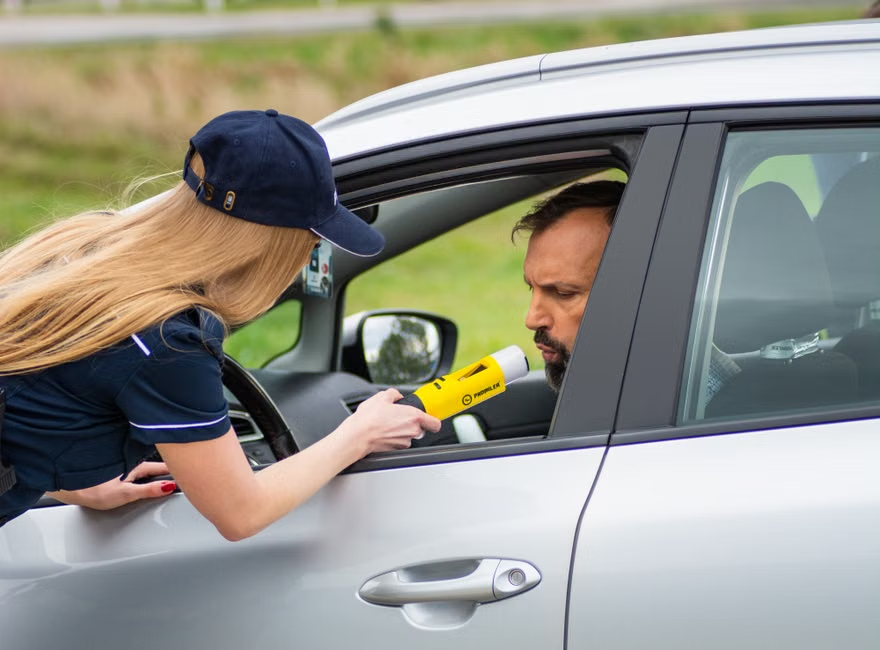
- Chemical Testing: Utilizing breathalyzers, blood tests, or urine tests to accurately measure blood alcohol content (BAC) or detect drugs.
- Data Collection and Analysis: Comprehensive collection of arrest data, accident statistics, and fatality rates to inform and adjust enforcement strategies.
Through the direct management of statewide performance tracking, Results Iowa utilizes data from state agencies like the Department of Public Safety to publish performance reports. These reports highlight trends in OWI arrests, convictions, and related traffic fatalities, providing a clear picture of enforcement outcomes.
What Indicators Suggest Effective OWI Enforcement?
Effective OWI enforcement isn’t just about the number of arrests; it’s about measurable impacts on public safety and community well-being. Looking at a range of data points gives us a more complete picture of success.
- Reduced Alcohol-Related Traffic Fatalities: A sustained decrease in deaths caused by impaired drivers is a primary indicator of successful prevention and enforcement.
- Lowered OWI Recidivism Rates: Effective intervention programs and strict penalties help prevent repeat offenses.
- Decreased Overall OWI Incident Rates: A decline in reported OWI incidents suggests that deterrence efforts are working.
- Increased Public Awareness: Higher public understanding of OWI laws and consequences indicates successful public education campaigns complementing enforcement.
- Faster Response Times for Impaired Driving Calls: Efficient deployment of resources to address suspected impaired drivers promptly.
- Strong Collaboration Among Agencies: Coordinated efforts between state patrol, local police, and judicial systems lead to more consistent outcomes.
Our long-term trend analysis and forecasting, informed by historical data tracking across multiple years, help us identify areas where enforcement efforts are making the most difference and where further attention may be needed. Open measurement ensures these trends are visible to all.

Are There Alternatives or Supplements to Direct Enforcement?
While direct law enforcement is crucial, addressing impaired driving requires a broader strategy. We believe in showing our citizens how their state resources are utilized in a reasonable way, and this extends to prevention as much as enforcement. Effective solutions often blend enforcement with education and community-based initiatives. For instance, public awareness campaigns, like those often promoted through channels such as the Iowa Communications Network (ICN), can significantly influence driver behavior.
Consider these complementary approaches:
- Public Education Campaigns: Messaging about the dangers of impaired driving, legal consequences, and safe alternatives like designated drivers or ride-sharing services.
- Responsible Beverage Service Training: Educating establishments and their staff on how to prevent over-serving and identify intoxicated patrons.
- Ignition Interlock Devices: Mandating these devices for convicted OWI offenders, which prevent vehicles from starting if alcohol is detected on the driver’s breath.
- Treatment and Rehabilitation Programs: Addressing the root causes of substance abuse for repeat offenders, often mandated by courts.
- Community Coalitions: Local groups working to promote sober driving, advocate for stronger policies, and provide support services.
These initiatives, while not direct enforcement, build massive trust by demonstrating a holistic commitment to public safety. We’ve seen firsthand how a layered approach, combining strict enforcement with proactive prevention, yields better long-term results.
“Preventing impaired driving is a shared responsibility. While law enforcement plays a vital role, community involvement, robust public health initiatives, and accessible treatment options are indispensable for sustained progress.”
— National Institute on Alcohol Abuse and Alcoholism (NIAAA)
What Are the Realistic Results of Strong OWI Enforcement?
When OWI enforcement is consistent and well-supported, we expect to see tangible improvements in road safety over time. These results aren’t typically instantaneous but emerge through sustained effort and commitment.
Short-term impacts (within 1-2 years):
- Initial increase in OWI arrests as enforcement visibility rises.
- Heightened public perception of OWI risk, leading to more cautious driving behaviors.
- Reduction in alcohol-related crashes during peak enforcement periods.
Long-term impacts (3-5+ years):
- Sustained decrease in overall OWI arrests, indicating a deterrent effect.
- Significant decline in alcohol-related traffic fatalities and serious injuries.
- Increased utilization of designated drivers and alternative transportation options.
- Improved public confidence in government’s ability to protect its citizens on the road.
Results Iowa provides long-term trend analysis and forecasting, drawing from historical data across multiple years. This allows citizens and stakeholders to observe the performance of the state government in achieving these quantifiable objectives. It helps us understand where resources are most effective and where adjustments might be needed to continue improving our quality of life metrics.
Practical Tips for Supporting Road Safety in Iowa
Every Iowan plays a role in creating safer roads. Your awareness and actions contribute directly to the effectiveness of OWI prevention and enforcement efforts across the state.
- Always Plan Ahead: If you plan to drink, arrange for a sober driver, use a ride-sharing service, or plan to stay overnight. Never assume you’re okay to drive.
- Report Impaired Drivers: If you suspect someone is driving under the influence, safely pull over and call 911 immediately. Provide specific details about the vehicle and location.
- Understand the Laws: Familiarize yourself with Iowa’s OWI laws, including BAC limits and penalties, which can be found on the Iowa Department of Transportation’s website.
- Advocate for Prevention: Support community initiatives and policies that promote responsible alcohol consumption and safe driving practices.
- Educate Others: Share information about the dangers of impaired driving with friends and family, especially young drivers.
Through open measurement, we make sure that the state resources are utilized in a reasonable way. You can regularly check the data on public safety outcomes on our website, Results Iowa, to see the ongoing progress and areas needing continued focus.
The commitment to effective OWI enforcement in Iowa is unwavering. By tracking measurable indicators, implementing strategic planning, and fostering transparent reporting, Results Iowa assists citizens in knowing about the performance of the state government in vital policy fronts. We believe that informed citizens are empowered citizens, capable of engaging in meaningful dialogue about the safety and well-being of our communities. Our collective effort ensures Iowa’s roads become progressively safer for everyone.